Shinjuku Gyoen is closed on Mondays. From 1 to 15 November 2026 it is not. The chrysanthemum exhibition sits in the Japanese garden those fifteen days, 9:00 to 16:30, last entry 16:00. After that the gate is done with you.
The Environment Ministry posted the 2026 dates on 6 October. The National Parks Association of Japan already had the same window on 24 September. Both say you pay the ordinary garden ticket. Adults ¥500. Age 65 and students from high school ¥250. Junior high and younger free. A disability certificate plus one carer is free. The beds add nothing on top of that ticket.
Seven shelters, not a hall of cut flowers
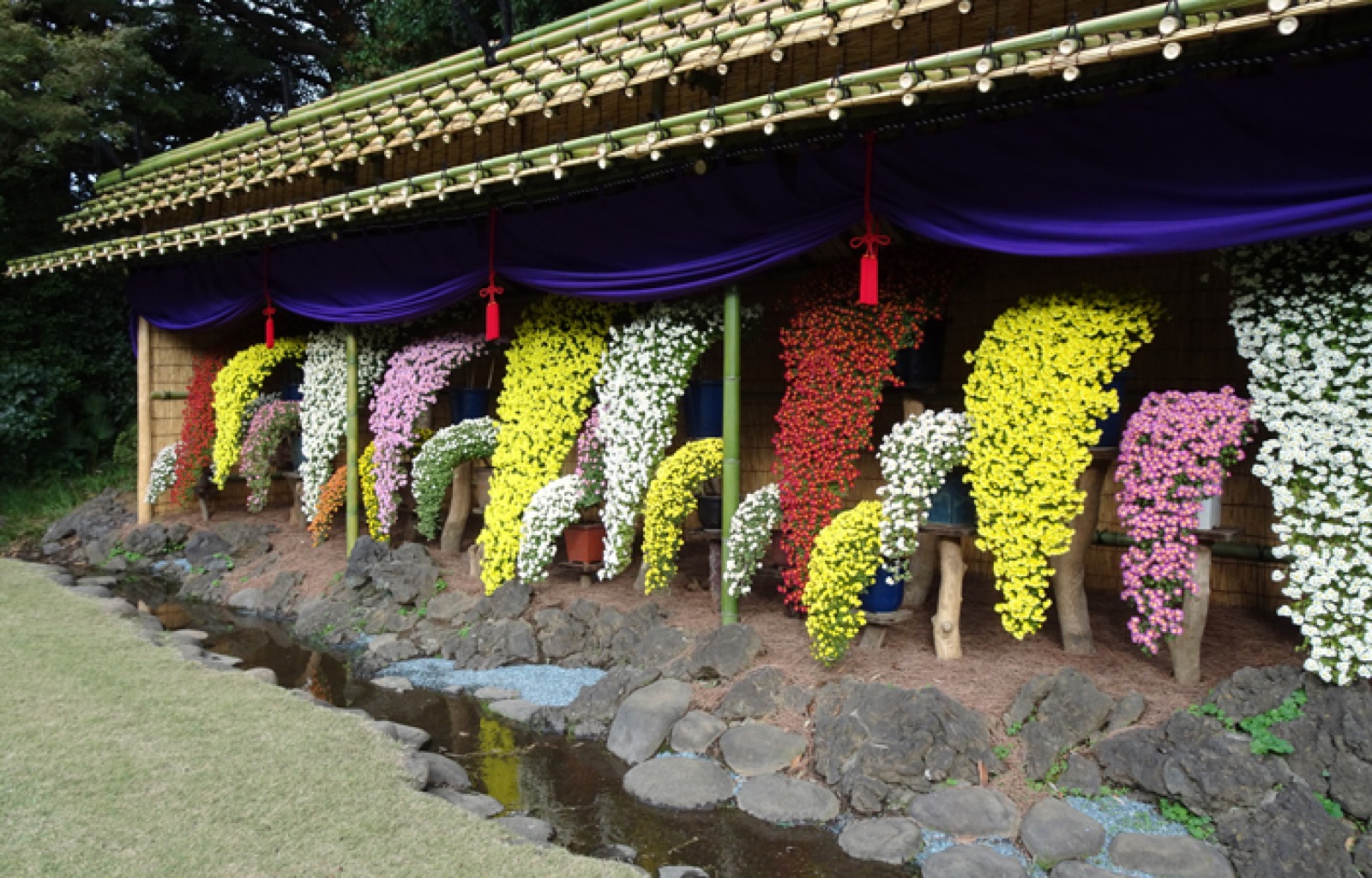
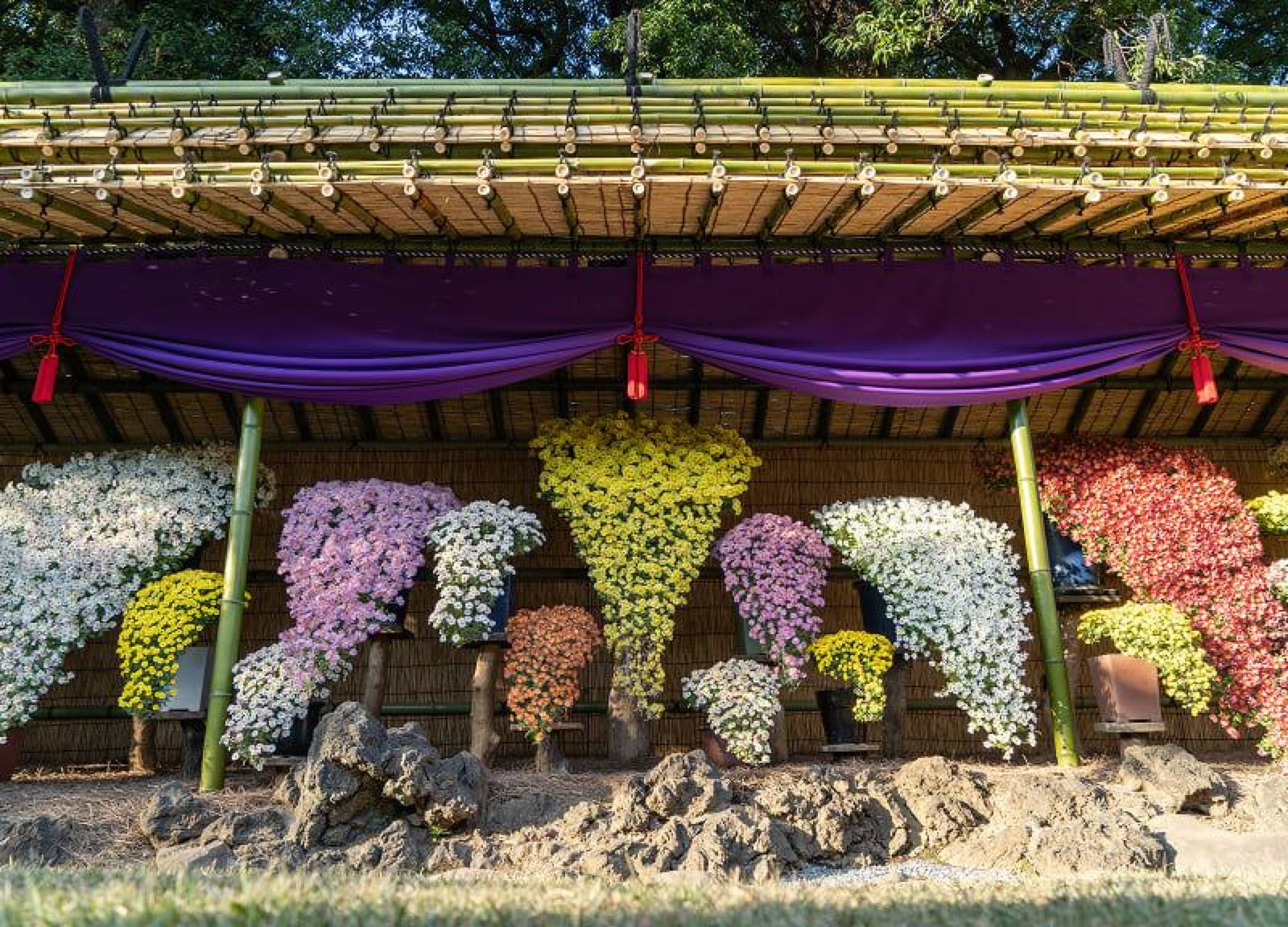
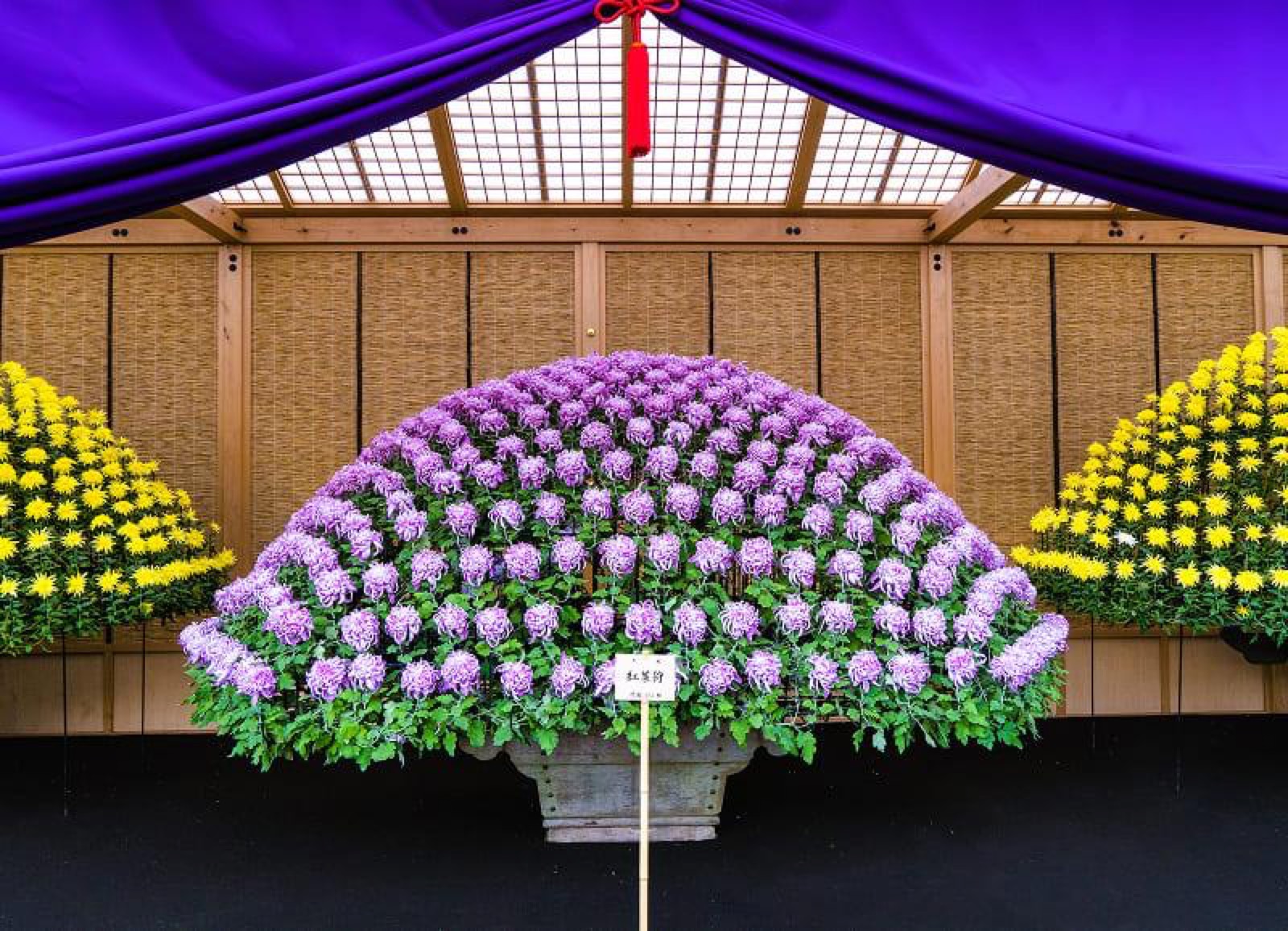
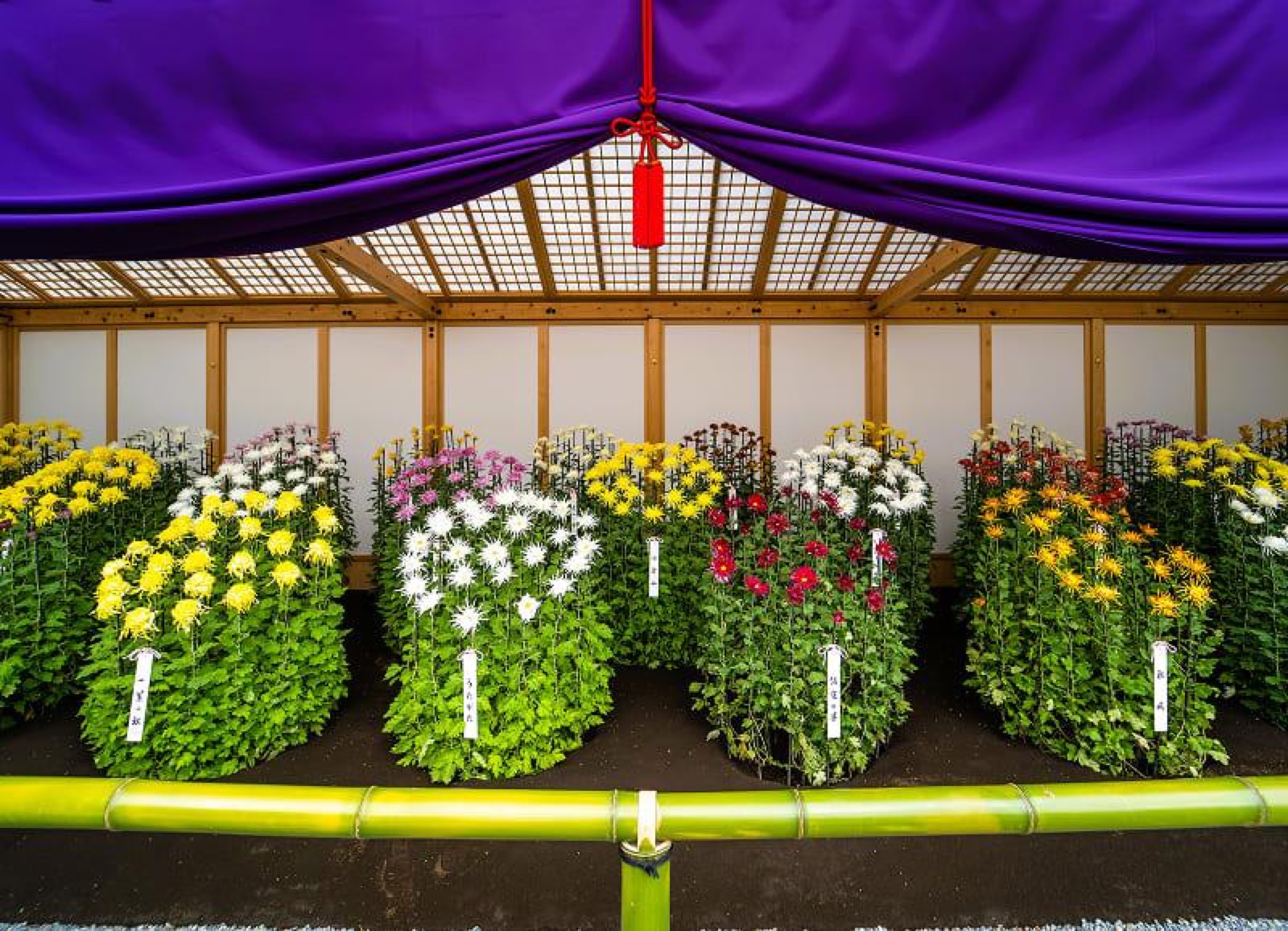
This is not a vase show indoors. Gardeners put up wooden or bamboo shelters called uwaya and train chrysanthemums into seven set forms. Two extra beds sit in the open. The Ministry tells you to walk the marked loop. That is the view they designed, not a random stroll past yellow blobs.
The lineage is older than the public park. In 1878 the Imperial Household held a chrysanthemum viewing at the temporary palace in Akasaka. Foreign envoys joined later under the name kankikukai. By 1929 the whole event had moved into Shinjuku Gyoen. War stopped it from 1937 to 1948. When the garden opened to the public in 1949, the beds came with it. You are looking at an imperial craft that now sits behind a ¥500 gate.
The Association names the seven beds. Walk them in order if you want the intended sequence.
- Kengaizukuri. One plant trained down a bamboo frame, as if wild chrysanthemums were hanging off a cliff. Water runs in front of the shelter.
- Ise, choji, and Saga. Three classical regional types in one house. Petals curl, pile, or stand up depending on which plant you are looking at.
- Ozukuri. Gyoen's own method. One plant, more than a year of work, hundreds of blooms in a half-circle. The largest shelter.
- Edo giku. Petals and colour keep changing after the flower opens. The shelter faces south so bloom can still move during the show.
- Ichimonji and kudamono. Flat sixteen-petal blooms next to tube petals that radiate out. The Ministry counts 26 cultivars, 194 plants.
- Higo giku. The smallest house. Gaps between petals, moss on black soil. Kumamoto court taste, not a mass of colour.
- Ogiku. Round blooms in yellow, white, then red, Gyoen's tazuna planting. 39 cultivars, 311 plants.
The free show starts outside the Shinjuku gate
You do not need a garden ticket for the commentary exhibit. It runs 27 October to 15 November in the art gallery on the first floor of the Information Center, outside the Shinjuku Gate. The Association and the Ministry both list it as free. If you only have twenty minutes, that is the room that tells you what the seven forms are before you pay ¥500 to see them.
A second small show about the chrysanthemum crew sits in the Service Center from 15 September to 15 November. That one is inside the garden, so the ticket applies.
16:00 is not a suggestion
Winter hours are already in force. Last entry 16:00, grounds to 16:30. People still treat Gyoen like a park you can wander at dusk. You cannot. The chrysanthemum fortnight does not extend the clock. It only cancels the Monday closures. If you want the full loop, be inside before 15:00. The last shelter is a walk, not a doorway next to the ticket desk.
After the beds come down, 16 November is a closed Monday again. The 38th orchid exhibition fills the garden from 17 to 23 November. If you want both shows, that is two tickets and a closed day in the middle. Do not plan Saturday 7 or Sunday 8 November as a quiet chrysanthemum morning. The Ministry calendar also puts GTF Green Challenge Day on those dates, with an early opening on the 8th. The loop still ends at 16:00.
Dates, the seven forms, and the loop sit on the event page. Carry the Ministry pamphlet if you want names at each shelter. Shinjuku-Gyoenmae Station is the Shinjuku Gate. Sendagaya Station is the Sendagaya Gate. There is no garden parking.
Practical Details
- Dates: 1 to 15 November 2026, open every day
- Time: 9:00 to 16:30, last entry 16:00
- Venue: Japanese Garden, Shinjuku Gyoen National Garden, 11 Naito-machi, Shinjuku-ku
- Nearest station: Shinjuku-Gyoenmae (Marunouchi) for Shinjuku Gate; Sendagaya for Sendagaya Gate
- Price: Adults ¥500, seniors and students ¥250, junior high and younger free
- Website: Ministry of the Environment press release